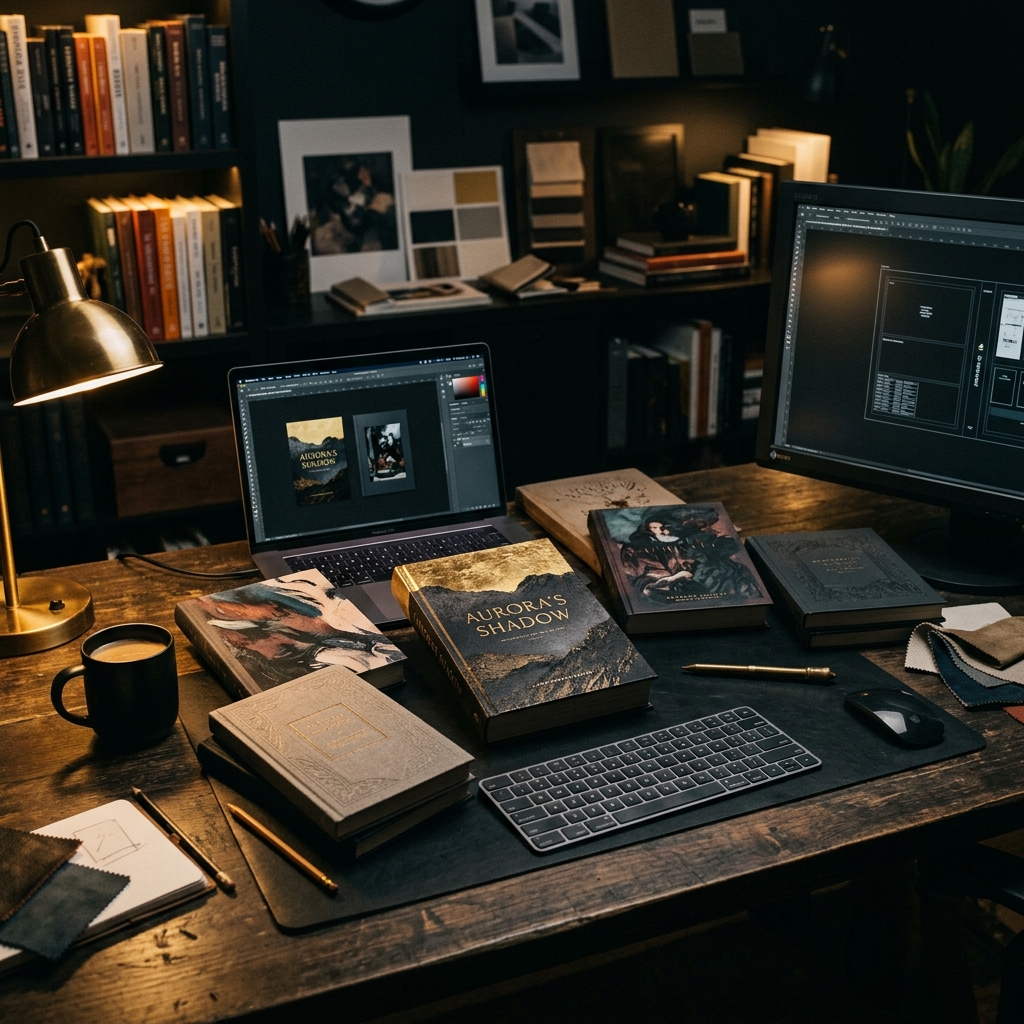
With the explosion of generative AI, many indie authors wonder: Is it worth paying for a professional human book designer when I can generate a cover in 30 seconds for free?
It is a tempting shortcut. However, book covers function as a commercial packaging system — not just art. In this guide, we explore the technical, legal, and conversion-rate realities of AI vs. human design, including KDP's 2026 AI disclosure mandates, copyright ownership gaps, and how to verify that a cover is print-ready and legally safe.
What is Amazon KDP's Policy on AI-Generated Content?
Amazon KDP has enforced strict disclosure rules. If your book cover or interior contains AI-generated text, images, or translations, you must disclose it under the "AI-Generated Content" section during setup. AI-assisted content (where humans write or design and use AI to brainstorm or edit) does not require disclosure, but full generative AI does. Amazon uses metadata and image scanners to flag undisclosed AI work; failing to disclose can lead to account suspension or listing termination.
Can You Copyright an AI-Generated Book Cover?
No. The US Copyright Office and UK IPO have consistently ruled that works created solely by AI do not possess human authorship and cannot be copyrighted. This means if you use a purely AI cover, other authors can legally copy, modify, and resell your cover artwork without any legal recourse. A human book designer transfers 100% of the copyright to you, ensuring your brand and cover remain unique and legally protected.
Why Do AI Cover Generations Fail Print Standards?
AI tools generate flat RGB images. A print-ready cover wrap requires a single cohesive file in CMYK color space at 300+ DPI, with exact bleed margins (0.125" beyond trim) and a spine width calculated to the millimeter based on page count. AI cannot calculate spine dimensions or handle vector typography. When you scale an AI thumbnail to print dimensions, artifacts and text distortion render the book instantly rejected by IngramSpark and KDP.
What Should You Look for in a Human Cover Designer?
A professional human cover designer should provide: (1) Licensed stock photography or original artwork with transferable usage rights, (2) native CMYK files at 300 DPI with correct bleed margins, (3) vector-based typography for titles that renders sharply at any scale, and (4) a written contract assigning full copyright to you. Reputable designers will also offer print-ready PDFs that pass KDP and IngramSpark validation on the first submission.
The Takeaway
While AI is a useful tool for concept brainstorming, professional publishing demands human precision. By ensuring your book covers and formatting are human-engineered, you protect your copyright, avoid account suspension, and build a lasting, prestigious author brand.
Frequently Asked Questions
Sources & Technical References
Related reading

KDP Formatting
How to Choose the Perfect Book Trim Size: 2026 KDP & IngramSpark Guide
12 min read
Typography & Layout
The Best Fonts for Printed Books: 2026 Guide to Serif vs Sans Serif Typography
11 min read

Typography & Layout
Book Formatting Costs 2026: DIY vs Professional Typesetter – Which Saves You More?
10 min read
Explore our book design services, read KDP formatting guide, see our portfolio, or view transparent pricing.